Buy fleetmanagement.eu ?
We are moving the project
fleetmanagement.eu .
Are you interested in purchasing the domain
fleetmanagement.eu ?
domain@kv-gmbh.de · 0541-91531010
Buy fleetmanagement.eu ?
How is efficiency related to thermal energy?
Efficiency is related to thermal energy in the context of energy conversion processes. In many systems, thermal energy is used to produce work or electricity. The efficiency of these systems is a measure of how much of the thermal energy input is converted into useful work or electricity. Higher efficiency means that more of the thermal energy is being effectively utilized, while lower efficiency indicates that more of the thermal energy is being wasted as heat. **
How is the efficiency related to thermal energy?
Efficiency is related to thermal energy in the context of energy conversion processes. The efficiency of a system or process is a measure of how much useful work or energy output is obtained compared to the total energy input. In the context of thermal energy, the efficiency of a system such as a power plant or an engine is a measure of how effectively it can convert thermal energy into useful work. Higher efficiency means that a greater proportion of the thermal energy input is being converted into useful work, while lower efficiency means that more of the thermal energy is being wasted as heat. Therefore, the relationship between efficiency and thermal energy is crucial in determining the overall performance and effectiveness of energy conversion processes. **


Similar search terms for Thermal
Top-Angebote
Products related to Thermal:
-
Clever Finds Smart Watch Display With Health Monitoring And Sports Tracking Smart Watch Display With Health Monitoring And Sports TrackingExperience smarter days with a watch designed to keep you connected, active, and in control. This advanced smart watch features a vibrant 2.01 inch AMOLED HD display, 24H health tracking, and multiple fitness tools for everyday performance. Built...95,97 $*Shipping: 0,00 $Secure redirect to the provider
-
Uriage Bébé 1st Thermal Water thermal water for children 150 mlUriage Bébé 1st Thermal Water, 150 ml, Kids’ Body Care For Kids, If you want to refresh, soothe and hydrate your skin simply and effectively, the Uriage Bébé 1st Thermal Water thermal water is the right choice. It comes from thermal springs rich in minerals and trace elements, meaning its composition therefore has a beneficial effect on the skin. It alleviates irritation, brings relief to sensitive skin and also strengthens the skin’s natural barrier, which in turn prevents unwanted moisture loss and helps maintain the skin’s ideal moisture levels. Characteristics: soothes irritation moisturises and softens refreshes tired skin strengthens the skin barrier Ingredients: dermatologically tested How to use: Spray onto sensitive areas of the face and skin and allow to work for a little while. It can be used not only on the face, but also on the skin of the entire body. Use as needed at any time during the day.6,40 £*Shipping: 3,99 £Secure redirect to the provider
-
Zebra ZT400 Series ZT411 - label printer - B/W - direct thermal / thermal transferZebra ZT400 Series ZT411 - Label printer - direct thermal / thermal transfer - Roll (11.4 cm) - 203 dpi - up to 356 mm/sec - USB 2.0, LAN, serial, USB host, Bluetooth 4.11650,99 £*Shipping: 0,00 £Secure redirect to the provider
-
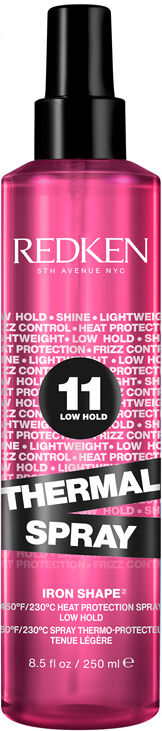
Redken Thermal Spray 250mlRedken Thermal Spray protects and repairs hair from thermal damage. Key Benefits: Heat protection 230°C 24 hour frizz protection Increased shine Bottle made from recycled plastic (excluding pump and cap) With a lightweight formula, this heat protector protects hair from up to 230°C and is suitable for all hair types. Frizz is reduced and hair is left with a glossy shine for that salon-fresh finish from root to tip. Formulated with Redken’s Heat Re-Style technology, this protecting mist can be applied once and still allow for endless re-styling throughout the day. Ingredients: Aqua / water • Isobutane • Propylene Glycol • Sodium Polystyrene Sulfonate • Carbomer • Triethanolamine • Phenoxyethanol • Peg-40 Hydrogenated castor oil • Parfum / fragrance • Peg-60 Almond Glycerides • Polysorbate 20 • Cocamidopropyl Betaine • Benzophenone-4 • Glyceryl Laurate • Sodium Chloride • Hydroxypropyltrimonium Hydrolyzed Wheat Protein • Glycerin • Alpha-isomethyl Ionone • Xylose • Linalool • Hydroxycitronellal • Hexyl Cinnamal • Citronellol • Sodium Benzoate • Geraniol • Limonene • Benzyl Alcohol • Isoeugenol20,40 £*Shipping: 0,00 £Secure redirect to the provider


-
What efficiency does a thermal power plant have?
A thermal power plant typically has an efficiency ranging from 30% to 40%. This means that only 30-40% of the energy from the fuel is converted into electricity, while the rest is lost as waste heat. Improving the efficiency of thermal power plants is a key focus for reducing greenhouse gas emissions and increasing energy sustainability. Various technologies and strategies, such as combined heat and power systems, can help increase the efficiency of thermal power plants. **
-
What is the efficiency of a thermal power plant?
The efficiency of a thermal power plant refers to the ratio of the electrical energy output to the heat energy input. It is a measure of how effectively the plant converts heat energy into electrical energy. A higher efficiency means that the plant is able to generate more electricity with the same amount of fuel, resulting in lower fuel consumption and reduced environmental impact. Improving the efficiency of thermal power plants is an important goal for reducing greenhouse gas emissions and increasing energy sustainability. **
-
How do you calculate the efficiency of thermal energy?
The efficiency of thermal energy can be calculated by dividing the useful output of energy (such as work or electricity) by the total input of energy. This can be expressed as a percentage by multiplying the result by 100. For example, if a power plant converts 40% of the thermal energy from burning coal into electricity, the efficiency of thermal energy conversion would be 40%. This calculation helps to assess how effectively thermal energy is being converted into useful forms of energy. **
-
Among which thermal pads is thermal paste used?
Thermal paste is typically used between the CPU and the heatsink to improve heat transfer. It is not used with thermal pads, as thermal pads are pre-applied or placed between components where a more solid interface is needed. Thermal paste is a better choice for areas where there are small gaps or uneven surfaces that need to be filled for optimal heat dissipation. **


Should one use a thermal pad instead of thermal paste?
Whether to use a thermal pad or thermal paste depends on the specific application and personal preference. Thermal pads are convenient and easy to use, making them a good choice for beginners or for situations where precision application is difficult. However, thermal paste generally provides better thermal conductivity and is often preferred for high-performance applications such as gaming PCs or overclocking. Ultimately, the decision should be based on the specific requirements of the hardware and the user's level of expertise. **
What is the difference between thermal energy and thermal power?
Thermal energy refers to the internal energy present in a system due to the motion and interaction of its particles. It is a measure of the total kinetic and potential energy of the particles in a substance. On the other hand, thermal power refers to the rate at which thermal energy is transferred or converted into other forms of energy, such as mechanical or electrical energy. It is a measure of the amount of thermal energy transferred per unit of time. In summary, thermal energy is the total energy present in a system, while thermal power is the rate at which thermal energy is transferred or converted. **
Top-Angebote
Products related to Thermal:
-
Uplifted Finds Mini Portable Folding Stove And High Fidelity Thermal Logistics Architecture Mini Portable Folding Stove And High Fidelity Thermal Logistics ArchitectureCommand ultimate environmental confidence with this Stainless Steel Mini Folding Stove, a thermal regulation solution specifically engineered to act as a comprehensive tool for elite organization and superior technical ergonomics. Built with a...177,97 $*Shipping: 0,00 $Secure redirect to the provider
-
Autodesk Vehicle Tracking - 1 Year (2027)NOTE: This license key is for an educational version of the software, offering all the features and functionality of the commercial version. There is no indication of the educational version in printed output, nor is there a watermark.Products details✓ Genuine license key for an Autodesk Vehicle Tracking subscription✓ Official download of the sofware from Autodesk's website✓ Free technical support available 7 days in a weekGet your Autodesk Vehicle Tracking in 3 easy stepsVehicle Tracking OverviewAutodesk Vehicle Tracking is a specialized transportation analysis and design software built for civil engineering professionals, transportation planners, and designers. It provides comprehensive tools for modeling and simulating vehicle swept paths, designing parking areas, analyzing intersections, and ensuring compliance with transportation design standards.This add-on integrates seamlessly with AutoCAD, Civil 3D, and MicroStation, offering a familiar environment for users while extending powerful vehicle movement simulation tools to plan and visualize real-world scenarios in transportation and infrastructure design.Key Features & Benefits Swept Path Analysis – Simulate and analyze vehicle turning movements for all types of vehicles including cars, trucks, buses, and emergency vehicles. Parking Lot Design – Plan and optimize parking layouts with automated design tools that comply with regulatory standards. Roundabout Design – Model and evaluate roundabouts with built-in templates and customizable geometry. Intersection Analysis – Assess and fine-tune intersections, including vehicle approach paths and visibility. Dynamic Simulation – Visualize how vehicles interact with infrastructure in real-time. Custom Vehicle Libraries – Use or create detailed vehicle types with accurate dimensions and steering behaviors. Integration with Autodesk Tools – Works within AutoCAD and Civil 3D environments for a seamless design workflow. Standards Compliance – Supports various country-specific and international road design regulations. Buy Vehicle Tracking at the best price from a trusted reseller!PrimeLicense is your go-to source for original software licenses, offering unbeatable value and exceptional service. Here's why you can trust us:✓ Genuine software at best price: We provide competitive pricing by reselling 'pre-owned' licenses, a practice legally permitted under the CJEU ruling of 3 July 2012.✓ Official downloads only: All software is downloaded directly from the official vendor's website, ensuring authenticity and security.✓ Free, highly qualified customer support: Our multilingual support team is available 7 days a week to assist you with any queries.✓ Trusted by thousands of clients: With an average rating of 4.9/5 on platforms like Trustpilot, Trusted Shops, and Google Reviews, we have earned the trust of countless customers.✓ Certified by leading Brands: As a certified partner of renowned brands like Adobe, Microsoft, McAfee, Parallels, and Kaspersky, we...42,90 £*Shipping: 0,00 £Secure redirect to the provider
-
Clever Finds Smart Watch Display With Health Monitoring And Sports Tracking Smart Watch Display With Health Monitoring And Sports TrackingExperience smarter days with a watch designed to keep you connected, active, and in control. This advanced smart watch features a vibrant 2.01 inch AMOLED HD display, 24H health tracking, and multiple fitness tools for everyday performance. Built...95,97 $*Shipping: 0,00 $Secure redirect to the provider
-
Uriage Bébé 1st Thermal Water thermal water for children 150 mlUriage Bébé 1st Thermal Water, 150 ml, Kids’ Body Care For Kids, If you want to refresh, soothe and hydrate your skin simply and effectively, the Uriage Bébé 1st Thermal Water thermal water is the right choice. It comes from thermal springs rich in minerals and trace elements, meaning its composition therefore has a beneficial effect on the skin. It alleviates irritation, brings relief to sensitive skin and also strengthens the skin’s natural barrier, which in turn prevents unwanted moisture loss and helps maintain the skin’s ideal moisture levels. Characteristics: soothes irritation moisturises and softens refreshes tired skin strengthens the skin barrier Ingredients: dermatologically tested How to use: Spray onto sensitive areas of the face and skin and allow to work for a little while. It can be used not only on the face, but also on the skin of the entire body. Use as needed at any time during the day.6,40 £*Shipping: 3,99 £Secure redirect to the provider
-
How is efficiency related to thermal energy?
Efficiency is related to thermal energy in the context of energy conversion processes. In many systems, thermal energy is used to produce work or electricity. The efficiency of these systems is a measure of how much of the thermal energy input is converted into useful work or electricity. Higher efficiency means that more of the thermal energy is being effectively utilized, while lower efficiency indicates that more of the thermal energy is being wasted as heat. **
-
How is the efficiency related to thermal energy?
Efficiency is related to thermal energy in the context of energy conversion processes. The efficiency of a system or process is a measure of how much useful work or energy output is obtained compared to the total energy input. In the context of thermal energy, the efficiency of a system such as a power plant or an engine is a measure of how effectively it can convert thermal energy into useful work. Higher efficiency means that a greater proportion of the thermal energy input is being converted into useful work, while lower efficiency means that more of the thermal energy is being wasted as heat. Therefore, the relationship between efficiency and thermal energy is crucial in determining the overall performance and effectiveness of energy conversion processes. **
-
What efficiency does a thermal power plant have?
A thermal power plant typically has an efficiency ranging from 30% to 40%. This means that only 30-40% of the energy from the fuel is converted into electricity, while the rest is lost as waste heat. Improving the efficiency of thermal power plants is a key focus for reducing greenhouse gas emissions and increasing energy sustainability. Various technologies and strategies, such as combined heat and power systems, can help increase the efficiency of thermal power plants. **
-
What is the efficiency of a thermal power plant?
The efficiency of a thermal power plant refers to the ratio of the electrical energy output to the heat energy input. It is a measure of how effectively the plant converts heat energy into electrical energy. A higher efficiency means that the plant is able to generate more electricity with the same amount of fuel, resulting in lower fuel consumption and reduced environmental impact. Improving the efficiency of thermal power plants is an important goal for reducing greenhouse gas emissions and increasing energy sustainability. **
Similar search terms for Thermal
-
Zebra ZT400 Series ZT411 - label printer - B/W - direct thermal / thermal transferZebra ZT400 Series ZT411 - Label printer - direct thermal / thermal transfer - Roll (11.4 cm) - 203 dpi - up to 356 mm/sec - USB 2.0, LAN, serial, USB host, Bluetooth 4.11650,99 £*Shipping: 0,00 £Secure redirect to the provider
-
Redken Thermal Spray 250mlRedken Thermal Spray protects and repairs hair from thermal damage. Key Benefits: Heat protection 230°C 24 hour frizz protection Increased shine Bottle made from recycled plastic (excluding pump and cap) With a lightweight formula, this heat protector protects hair from up to 230°C and is suitable for all hair types. Frizz is reduced and hair is left with a glossy shine for that salon-fresh finish from root to tip. Formulated with Redken’s Heat Re-Style technology, this protecting mist can be applied once and still allow for endless re-styling throughout the day. Ingredients: Aqua / water • Isobutane • Propylene Glycol • Sodium Polystyrene Sulfonate • Carbomer • Triethanolamine • Phenoxyethanol • Peg-40 Hydrogenated castor oil • Parfum / fragrance • Peg-60 Almond Glycerides • Polysorbate 20 • Cocamidopropyl Betaine • Benzophenone-4 • Glyceryl Laurate • Sodium Chloride • Hydroxypropyltrimonium Hydrolyzed Wheat Protein • Glycerin • Alpha-isomethyl Ionone • Xylose • Linalool • Hydroxycitronellal • Hexyl Cinnamal • Citronellol • Sodium Benzoate • Geraniol • Limonene • Benzyl Alcohol • Isoeugenol20,40 £*Shipping: 0,00 £Secure redirect to the provider
-
How do you calculate the efficiency of thermal energy?
The efficiency of thermal energy can be calculated by dividing the useful output of energy (such as work or electricity) by the total input of energy. This can be expressed as a percentage by multiplying the result by 100. For example, if a power plant converts 40% of the thermal energy from burning coal into electricity, the efficiency of thermal energy conversion would be 40%. This calculation helps to assess how effectively thermal energy is being converted into useful forms of energy. **
-
Among which thermal pads is thermal paste used?
Thermal paste is typically used between the CPU and the heatsink to improve heat transfer. It is not used with thermal pads, as thermal pads are pre-applied or placed between components where a more solid interface is needed. Thermal paste is a better choice for areas where there are small gaps or uneven surfaces that need to be filled for optimal heat dissipation. **
-
Should one use a thermal pad instead of thermal paste?
Whether to use a thermal pad or thermal paste depends on the specific application and personal preference. Thermal pads are convenient and easy to use, making them a good choice for beginners or for situations where precision application is difficult. However, thermal paste generally provides better thermal conductivity and is often preferred for high-performance applications such as gaming PCs or overclocking. Ultimately, the decision should be based on the specific requirements of the hardware and the user's level of expertise. **
-
What is the difference between thermal energy and thermal power?
Thermal energy refers to the internal energy present in a system due to the motion and interaction of its particles. It is a measure of the total kinetic and potential energy of the particles in a substance. On the other hand, thermal power refers to the rate at which thermal energy is transferred or converted into other forms of energy, such as mechanical or electrical energy. It is a measure of the amount of thermal energy transferred per unit of time. In summary, thermal energy is the total energy present in a system, while thermal power is the rate at which thermal energy is transferred or converted. **
* All prices are inclusive of VAT and, if applicable, plus shipping costs. The offer information is based on the details provided by the respective shop and is updated through automated processes. Real-time updates do not occur, so deviations can occur in individual cases. ** Note: Parts of this content were created by AI.